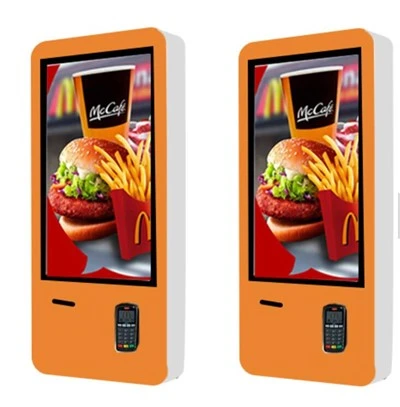
LCD Outdoor Advertising display : Technical Architecture and Application Scenario Analysis
Abstract: Outdoor LCD advertising machines are terminal devices deployed in outdoor environments that disseminate information via LCD liquid crystal display screens. Unlike traditional lightbox advertising or indoor displays, they require specialized design to withstand complex outdoor physical environments. From the perspectives of technical architecture and application scenarios, outdoor advertising machines have evolved into important carriers for urban commercial and public information dissemination.
1. Technical Architecture: Engineering Design for Harsh Environments
An outdoor digital display is far more than "an LCD panel placed inside a metal frame." Its bill of materials typically comprises five core modules, each involving distinct cost structures and quality gradients: panel and high-brightness backlight (30–40%), sealed enclosure and thermal management system (25–35%), cover glass and optical bonding (10–20%), controller and media player (5–15%), and certification and compliance (3–8%). Among these, thermal management and sealing constitute the most critical technical barriers, directly determining device lifespan and failure rate.
1.1 Thermal Management: The Core Challenge of High-Temperature Environments
Outdoor advertising machines must operate continuously in direct sunlight, with surface temperatures potentially reaching 60°C or higher. If heat is not effectively dissipated, LCD panels will experience brightness attenuation, color shift, and even permanent damage. Current mainstream thermal management solutions fall into three categories: air conditioning cooling, air-cooled heat dissipation, and TEC (Thermoelectric Cooler) cooling.
Taking a representative patent technology as an example, a water-cooled LCD advertising machine equipped with a TEC cooling air conditioner employs a dual-layer structure design: the upper layer houses the display screen in a sealed state to prevent dust intrusion, while the lower layer contains a water cooling system and TEC refrigeration system for heat dissipation. Specifically, a water cooling plate is attached to the back of the screen to absorb heat, with coolant circulating through a pump to a water cooling radiator for heat exchange; the TEC cooling plate further enhances cooling efficiency, with an IP65 protection rating ensuring resistance to dust and water ingress. This design achieves efficient heat dissipation while maintaining internal cleanliness of the enclosure.
1.2 High Brightness and Visibility
The core advantage of outdoor digital signage over traditional lightboxes lies in dynamic display and remote content management. However, to remain legible under direct sunlight, screen brightness must typically reach 2,000–2,500 nits or higher, several times that of indoor displays (typically 300–500 nits). For instance, Dahua's 49-inch outdoor wall-mounted digital signage offers a brightness of 2,500 nits, paired with anti-reflective glass to ensure clear visibility in direct sunlight. Additionally, optical bonding technology eliminates internal reflections between the LCD panel and cover glass, significantly improving outdoor readability-this is also a key process that low-cost solutions tend to omit.
1.3 Protection and Environmental Adaptability
Outdoor kiosk must simultaneously address dust, rain, vandalism, and extreme temperatures. Mainstream products typically achieve IP55 or higher protection ratings, with some customizable to IP65. The enclosure material generally employs galvanized steel plate or aluminum alloy profiles, with tempered glass as the front protective layer. Operating temperature ranges typically cover -15°C to +45°C, with some high-end models supporting wider ranges. Furthermore, built-in intelligent temperature control systems automatically adjust brightness and cooling power based on ambient temperature to balance display performance and energy consumption.
1.4 Content Management and Remote Operations
Modern outdoor touch kiosk totem are typically equipped with built-in media players (such as Android systems) and support remote content publishing through network connectivity (RJ45, Wi-Fi, 4G/5G). Content management system (CMS) platforms enable operators to remotely update playlists, monitor device status, and receive fault alerts. This capability transforms outdoor advertising machines from "one-time deployment terminals" into "continuously operable media assets," significantly enhancing advertising value and operational efficiency.
2. Application Scenarios: From Commercial Advertising to Urban Public Services
The application boundaries of outdoor LCD advertising machines are continuously expanding, extending from initial commercial advertising into public information services and smart city infrastructure.
2.1 Commercial Districts and Retail Environments
In high-traffic commercial districts such as shopping streets, shopping mall exteriors, and storefronts, outdoor advertising machines serve as high-impact brand communication vehicles. Compared to static lightboxes, dynamic video content captures attention more effectively and supports real-time updates of promotional information. Industry research indicates that the global outdoor advertising machine market reached approximately **$3.65 billion** in 2025, with a projected compound annual growth rate (CAGR) of approximately **6.2%** from 2026 to 2032, rising to approximately $5.5 billion by 2032. Growth in this segment is significantly higher than that of the overall advertising machine category, reflecting sustained advertiser demand for outdoor digital media.
2.2 Transportation Hubs
Airports, high-speed rail stations, metro stations, and bus stops represent high-density, high-dwell-time scenarios for outdoor advertising machines. A representative case is the Lisbon Metro in Portugal, where TRISON deployed over ten high-brightness LED screens and multiple digital signage units at key stations including Rossio and Saldanha, providing advertisers with flexible configurations while ensuring continuous operation in busy transit environments. In China, public transit hubs such as bus terminals and rail transit stations are also listed as core application scenarios for outdoor advertising machines by manufacturers such as Inspur.
It is noteworthy that in transportation scenarios, real-time information distribution and advertising functions often need to coexist. Some transit agencies are exploring solar-powered ePaper signage to provide real-time arrival information at bus stops lacking power infrastructure. For example, TriMet in Portland, USA, has deployed over 450 solar-powered ePaper displays across its network, with content remotely updated via a cloud platform, significantly improving passenger confidence. Although ePaper technology differs from LCD, its logic of "solving information reach in off-grid scenarios" offers useful reference for site selection and functional design of outdoor LCD advertising machines.
2.3 Municipal Public Services and Smart City
Outdoor displays deployed by municipal governments for public information dissemination represent another important application direction. In Germany, Wedeko has implemented digital citizen information systems in multiple cities including Ulm, Schönau, and Hockenheim, installing outdoor touch displays at city hall entrances and public areas to publish administrative announcements, event information, and service guides. The value of such applications lies not in advertising revenue but in enhancing government-public communication efficiency and urban digital service levels.
2.4 Other Emerging Scenarios
With technological maturation and cost reduction, outdoor advertising machines are also being applied in parks and scenic areas, hospital entrances, community public spaces, and other locations. Mobile electronic signage with built-in battery power (offering 5–7 hours of battery life) is also entering outdoor markets and exhibition activities, further expanding the boundaries of outdoor digital display.
3. Market Trends and Technology Outlook
From a market structure perspective, outdoor advertising machines are in a phase of "steady growth + structural upgrading." QYResearch data shows that the global outdoor advertising machine market was approximately $3.65 billion in 2025, with a CAGR of approximately 6.2% from 2026 to 2032, significantly higher than the overall advertising machine category. This growth is driven by two factors: on one hand, brands and media operators are increasing their digital out-of-home (DOOH) budgets; on the other hand, the progressive decline in LCD panel costs and maturation of thermal management technologies are lowering deployment barriers.
Technologically, future outdoor advertising machines will evolve along three directions: higher brightness and lower power consumption (such as Mini LED backlight technology), more intelligent thermal management (dynamically adjusting cooling power based on ambient temperature and content brightness), and deeper integration with smart city platforms (achieving unified management and data sharing across devices). Meanwhile, the total cost of ownership (TCO) over a five-year period is becoming an increasingly important decision-making factor. The cheapest initial procurement price often means compromises in thermal management, sealing, and optical bonding, which subsequently translate into higher maintenance costs and shorter service life.
FAQ
Q1: What is the core difference between outdoor LCD advertising machines and indoor displays?
Outdoor LCD advertising machines must address direct sunlight, extreme temperatures, dust and rain, and vandalism. Core differences include: brightness typically at 2,000–2,500 nits (several times that of indoor displays), IP55 or higher protection ratings, professional thermal management systems (air conditioning, TEC, or water cooling), and high-temperature-resistant and anti-UV materials. Indoor displays lack these designs and would rapidly fail or be damaged if deployed outdoors.
Q2: How much does an outdoor LCD advertising machine typically cost?
According to industry data, the FOB price range for outdoor and window digital signage is wide, typically ranging from $3,000 to $200,000 per unit, depending on screen size (40–55 inches, 56–65 inches, 65 inches and above), brightness levels, thermal management solutions, and protection ratings. Low-cost products may reduce thermal management and sealing specifications, leading to higher failure rates and maintenance costs in high-temperature or dusty environments.
Q3: What is the service life of outdoor LCD advertising machines?
The rated lifespan of LCD panels is typically 50,000 hours (approximately 5.7 years under continuous operation), but actual service life is significantly affected by thermal management quality and operating environment. Devices with well-designed thermal management systems can operate stably for 5–7 years or longer, while poorly cooled devices may experience brightness attenuation or panel damage within 2–3 years. Regular cleaning of heat dissipation channels and inspection of sealing performance are key to extending service life.
Q4: Can outdoor LCD advertising machines operate normally in cold regions?
Yes. Mainstream products typically support operating temperature ranges of -15°C to +45°C, with some models offering wider ranges. In extremely cold environments, LCD response speed may decrease, and some devices are equipped with heating modules to ensure startup and display performance at low temperatures. When selecting models, operating temperature ranges should be confirmed based on the target deployment region.
Q5: What methods are available for remote content management of outdoor advertising machines?
Most commercial outdoor advertising machines are equipped with built-in Android or equivalent players and support content publishing via RJ45 Ethernet, Wi-Fi, or 4G/5G networks. Operators can use CMS (Content Management System) platforms to remotely update playlists, schedule playback, monitor device status and temperature, and receive fault alerts. Some platforms also support OTA (Over-the-Air) firmware updates, eliminating the need for on-site maintenance.